

Introduction: From Reactive Operations to Autonomous Systems
E-commerce and global trade have pushed supply chains to their limits. Volatile demand, shorter delivery expectations, geopolitical disruptions, and rising logistics costs have made traditional, rule-based supply chain management increasingly ineffective. In response, Artificial Intelligence (AI) is redefining logistics and fulfillment—transforming them from reactive, manual, and siloed functions into proactive, automated, and interconnected systems.
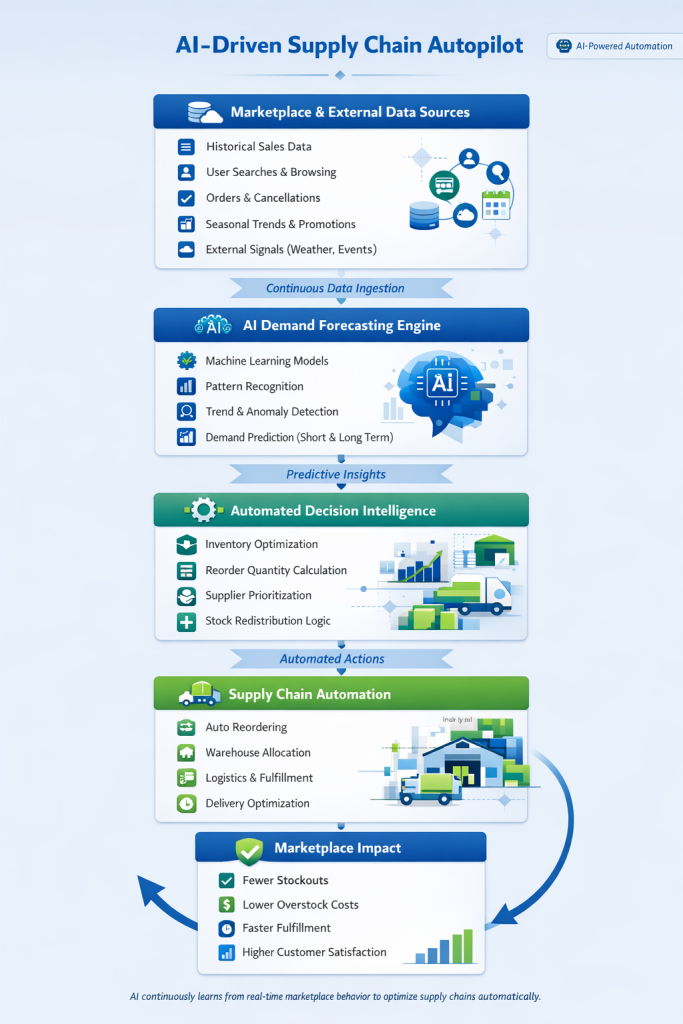
This evolution is often described as the “autopilot supply chain”: a model where AI continuously senses demand and supply signals, makes decisions in real time, and executes actions across warehousing, transportation, and fulfillment with minimal human intervention.
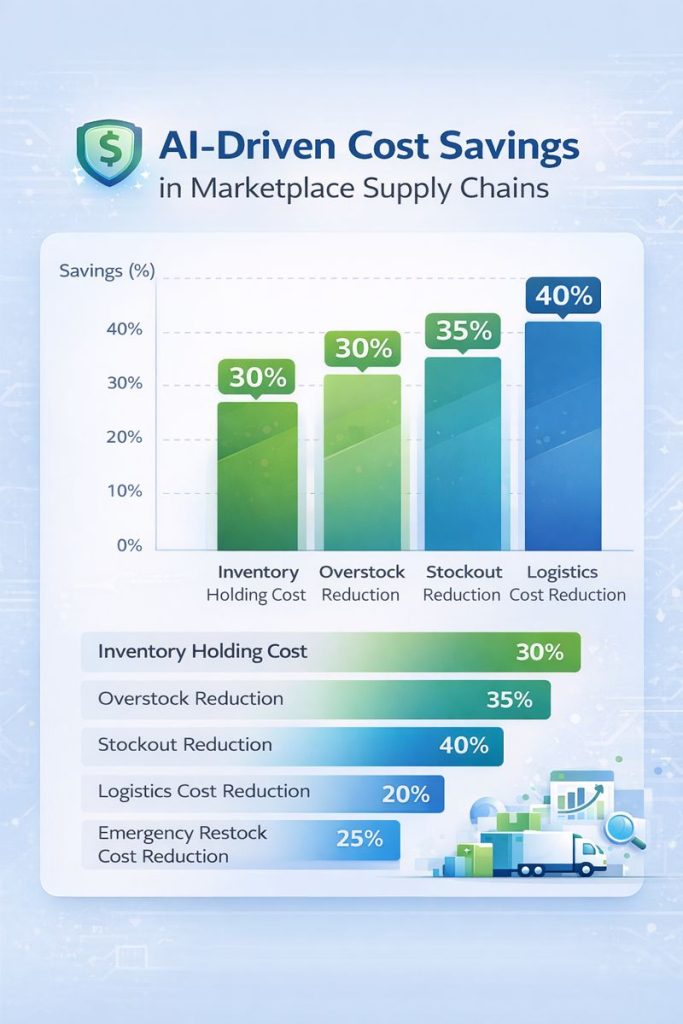
Early adopters of AI-driven supply chain systems report 15–20% reductions in logistics costs, up to 35% improvement in inventory efficiency, and service-level improvements exceeding 60%, demonstrating that AI is no longer experimental—it is becoming operationally essential.
Why Supply Chains Need Autopilot Capabilities?
Modern supply chains operate in an increasingly complex and fast-moving environment where traditional planning approaches struggle to keep pace. Demand has become highly volatile, influenced by social media trends, dynamic pricing, flash promotions, and seasonal spikes that can shift purchasing behavior almost overnight. At the same time, fulfillment networks are no longer centralized; they span multiple nodes such as dark stores, micro-warehouses, and third-party logistics providers, adding layers of operational complexity.
Customer expectations for same-day and next-day delivery continue to rise, while organizations face persistent labor shortages, escalating fuel costs, and growing pressure to reduce carbon emissions and meet sustainability goals. In this context, manual planning cycles and static forecasting models are simply too slow and rigid to respond effectively.
Artificial Intelligence bridges this gap by enabling continuous, data-driven decision-making, allowing supply chain systems to learn from real-time signals, adapt to disruptions, and optimize operations autonomously as conditions change.
Key Areas of AI-Driven Transformation
AI-driven supply chain transformation does not occur in isolation. Instead, intelligence is embedded across planning, execution, and optimization layers, enabling continuous feedback loops and self-correcting operations. Each functional area benefits from specialized AI models that collaborate to create an end-to-end autonomous system.
1. Demand Forecasting: The Brain of the Supply Chain
Demand forecasting acts as the cognitive core of an autopilot supply chain. Traditional forecasting models rely on static historical averages and predefined rules, which struggle to adapt to sudden market shifts. AI-powered forecasting systems, by contrast, use machine learning and deep learning to process vast and diverse datasets in real time.
These systems analyze historical sales data alongside external demand signals such as online search trends, social media engagement, marketing campaigns, regional events, weather forecasts, and macroeconomic indicators. Advanced neural networks—such as LSTM and transformer-based architectures—capture long-term dependencies and seasonality patterns that human planners often miss.

As a result, demand forecasts are continuously updated, allowing organizations to respond dynamically to demand spikes, supply disruptions, or changes in consumer behavior. This significantly reduces the bullwhip effect, stabilizes supplier orders, and ensures inventory is positioned closer to where demand is most likely to occur.
2. Warehouse Automation: Autonomous Fulfillment at Scale
Warehouses are rapidly evolving into highly automated, AI-orchestrated fulfillment hubs. AI-driven warehouse management systems coordinate robotics, human labor, and inventory flows to maximize throughput while minimizing errors and operational costs.
Autonomous Mobile Robots (AMRs) use AI-based navigation and mapping algorithms to move goods efficiently across warehouse floors, dynamically rerouting to avoid congestion or hazards. Computer vision systems enable robotic arms to identify products, assess their orientation, and pick items with increasing accuracy—even when packaging varies or items are partially obscured.
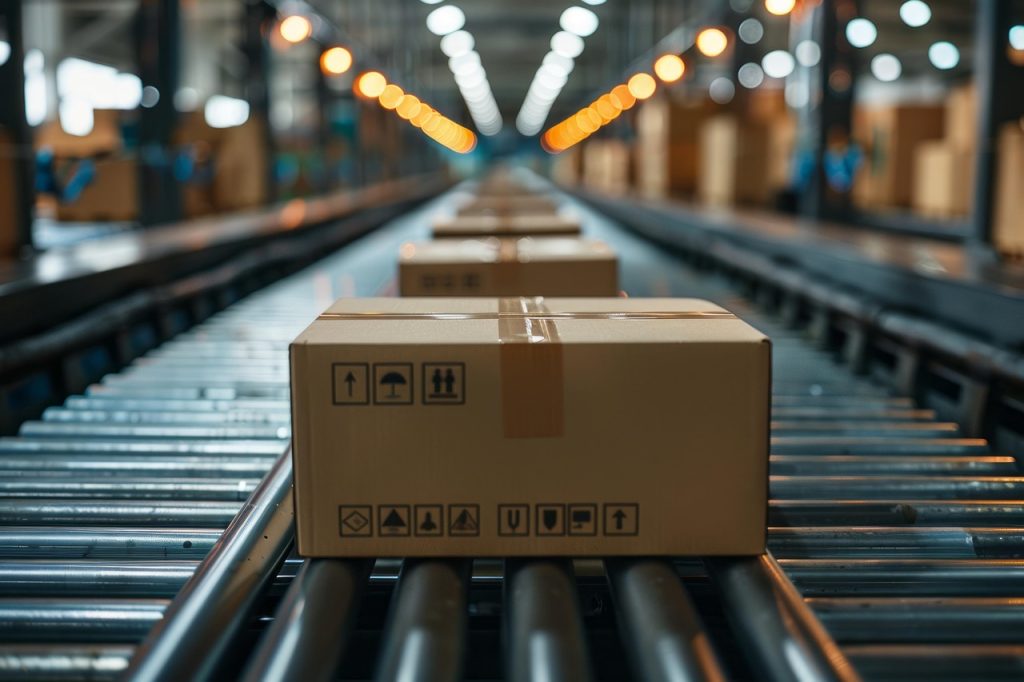
AI also plays a critical role in warehouse layout optimization. By analyzing order frequency, picking paths, and demand velocity, AI continuously adjusts slotting strategies, ensuring fast-moving products are placed in optimal locations. This reduces pick times, lowers labor fatigue, and improves order fulfillment speed.
3. Logistics and Route Optimization: Intelligent Transportation Networks
Transportation optimization is one of the most impactful applications of AI in supply chain operations. AI-powered logistics platforms analyze real-time data streams including traffic congestion, weather conditions, delivery time windows, fuel prices, and vehicle capacity constraints.
Using reinforcement learning and optimization algorithms, these platforms dynamically determine the most efficient delivery routes, adjusting plans as conditions change throughout the day. This allows logistics providers to balance speed, cost, and sustainability simultaneously.

Beyond route planning, AI enables intelligent load consolidation and last-mile optimization. By predicting delivery density and customer availability, AI reduces failed delivery attempts and improves on-time-in-full (OTIF) performance—an increasingly critical metric in e-commerce and marketplace logistics.
4. Predictive Maintenance: Ensuring Continuous Operations
Operational disruptions caused by equipment failure can cascade across the entire supply chain. AI-driven predictive maintenance shifts maintenance strategies from reactive repairs to proactive prevention.
IoT sensors embedded in forklifts, conveyors, sorting machines, and delivery vehicles continuously collect data on vibration, temperature, pressure, and utilization rates. Machine learning models analyze this data to identify early warning signs of wear or failure long before breakdowns occur.
This approach minimizes unplanned downtime, extends asset lifecycles, and reduces maintenance costs. For high-volume fulfillment centers and fleet-based logistics operations, predictive maintenance plays a crucial role in maintaining service reliability during peak demand periods.

5. Document Automation: AI-Driven Back-Office Efficiency
Despite advances in physical automation, logistics remains heavily dependent on documentation. AI-powered document automation systems address this challenge by digitizing and streamlining administrative workflows.
<p? Using a combination of optical character recognition (OCR), natural language processing (NLP), and generative AI, these systems extract structured data from unstructured documents such as bills of lading, customs forms, invoices, and proof-of-delivery records. AI models validate data accuracy, cross-check information across systems, and flag discrepancies for human review.This reduces processing times from days to minutes, lowers error rates, and improves compliance across multi-party logistics networks. For global supply chains, document automation is a key enabler of scalability and transparency.
How AI Benefits Logistics Operations?
1. Improved Planning and Cost Optimization:
AI enhances logistics planning by analyzing large volumes of historical and real-time data, including shipment records, demand forecasts, fuel prices, carrier performance, and capacity constraints. Machine learning models identify cost-saving opportunities such as optimal carrier selection, shipment consolidation, and mode switching. This results in lower transportation costs, better budget predictability, and improved margins without compromising delivery commitments.
2. Real-Time Route and Network Optimization:
AI-powered route optimization systems continuously evaluate live traffic conditions, weather disruptions, delivery windows, and vehicle capacity. Unlike static routing tools, AI dynamically recalculates routes throughout the day, ensuring faster deliveries and fewer delays. This is particularly valuable in last-mile logistics, where AI reduces failed delivery attempts, shortens delivery times, and lowers fuel consumption.
3. End-to-End Visibility and Proactive Issue Resolution:
AI enables real-time visibility across the logistics network through intelligent control towers. These systems monitor shipments from origin to destination and detect potential disruptions such as port congestion, transit delays, or customs issues early. AI can automatically trigger corrective actions—such as rerouting or carrier switching—allowing teams to resolve issues proactively instead of reacting after service failures occur.
4. Predictive Maintenance and Asset Reliability:
Logistics operations rely heavily on physical assets like trucks, forklifts, conveyors, and sorting systems. AI-driven predictive maintenance analyzes IoT sensor data, usage patterns, and historical maintenance records to anticipate equipment failures before they happen. This minimizes unplanned downtime, extends asset life, and ensures consistent service levels, especially during peak demand periods.
5. Automation of Documentation and Administrative Processes:
AI simplifies logistics documentation by automating the processing of invoices, bills of lading, customs declarations, and proof-of-delivery records. Using OCR, natural language processing, and generative AI, these systems extract, validate, and reconcile data across multiple documents and systems. This reduces manual errors, accelerates billing cycles, and improves compliance in complex, multi-party logistics environments.
6. Enhanced Sustainability and Emissions Reduction:
AI supports sustainable logistics by optimizing routes, improving load utilization, and reducing empty miles. By minimizing fuel consumption and optimizing delivery schedules, AI helps organizations lower their carbon footprint while meeting regulatory and ESG requirements. These sustainability gains also translate into cost savings and improved brand reputation.
7. Greater Resilience and Scalability:
AI strengthens logistics resilience by enabling scenario simulation and disruption forecasting. Organizations can model events such as supplier delays, labor shortages, or extreme weather and prepare mitigation strategies in advance. This allows logistics networks to scale efficiently, adapt quickly to change, and maintain reliable service in volatile market conditions.
The Future of AI in Logistics
By 2026, nearly 70% of logistics providers are expected to adopt AI-driven solutions to improve resilience, reduce costs, and manage growing supply chain complexity. AI is becoming a core capability rather than an optional enhancement, enabling logistics networks to operate faster, smarter, and with greater adaptability.
One major trend is the expansion of autonomous vehicles across logistics operations. AI-powered trucks, yard vehicles, and warehouse transport systems will handle repetitive and long-distance movements with minimal human intervention, improving asset utilization and reducing labor dependency.
Drones and robotic systems will increasingly support last-mile delivery, particularly in urban and hard-to-reach areas. AI enables these systems to optimize routes, respond to real-time conditions, and coordinate seamlessly with traditional delivery fleets, helping reduce delivery times and costs.
The integration of AI with blockchain will enhance transparency and security in global logistics. Blockchain ensures tamper-proof tracking of shipments and documents, while AI analyzes this data to predict delays, detect anomalies, and automate compliance and dispute resolution.
Overall, the future of logistics lies in autonomous, self-optimizing supply chains where AI continuously learns, adapts, and balances speed, cost, and sustainability—driving more resilient and efficient global logistics networks.
Conclusion
AI is transforming logistics from reactive operations into intelligent, autonomous systems. By enabling real-time decision-making, improving efficiency, and increasing resilience, AI helps organizations reduce costs, meet rising customer expectations, and adapt to constant change. As supply chains grow more complex, AI-driven logistics is becoming essential for sustainable and competitive growth.
FAQ's
1. What is AI in logistics?
AI in logistics refers to the use of machine learning, data analytics, computer vision, and automation to optimize transportation, warehousing, fulfillment, and supply chain planning. It enables smarter decision-making, real-time optimization, and predictive operations.
2. How does AI reduce logistics costs?
AI reduces costs by optimizing routes, improving load utilization, minimizing fuel consumption, preventing equipment failures through predictive maintenance, and automating manual administrative tasks such as documentation and invoicing.
3. Can AI improve delivery speed and accuracy?
Yes. AI dynamically optimizes routes, predicts delays, and improves warehouse picking accuracy using robotics and computer vision. This results in faster deliveries, fewer errors, and higher on-time-in-full (OTIF) performance.
4. Is AI only suitable for large logistics companies?
No. While large enterprises benefit significantly, cloud-based AI platforms and modular solutions make AI accessible to mid-sized and even smaller logistics providers, marketplaces, and e-commerce businesses.
5. How does AI improve supply chain resilience?
AI continuously monitors supply chain data, predicts disruptions, and recommends or executes corrective actions. This helps organizations respond proactively to delays, demand fluctuations, and external risks.
6. What role does AI play in sustainability?
AI supports sustainability by reducing fuel usage, optimizing routes, lowering emissions, and improving inventory efficiency. Many AI systems now include carbon-aware optimization aligned with ESG goals.
7. What are the biggest challenges in implementing AI in logistics?
The main challenges include data quality and integration, implementation costs, system complexity, and organizational change management. Successful adoption requires clean data, skilled teams, and a phased implementation approach.