

Introduction
Getting paid on time shouldn’t be a constant struggle, yet for many businesses, invoicing and payment follow-ups remain one of the most time-consuming and frustrating parts of operations. Finance teams often find themselves stuck in a loop of sending invoices, tracking due dates, and chasing clients for payments, only to face delays, missed communications, and inconsistent cash flow. As businesses scale, these challenges only grow, making manual processes inefficient and unsustainable.
This is where Invoice & Payment Reminder Agents come in. By combining automation with AI-driven intelligence, these agents transform how businesses manage invoicing and collections. Instead of relying on manual follow-ups, companies can automate the entire process, from sending invoices to reminding customers and tracking payments, ensuring consistency, accuracy, and faster collections. The result is not just improved cash flow, but also a more efficient finance operation and better customer experience.
What Are Invoice & Payment Reminder Agents?
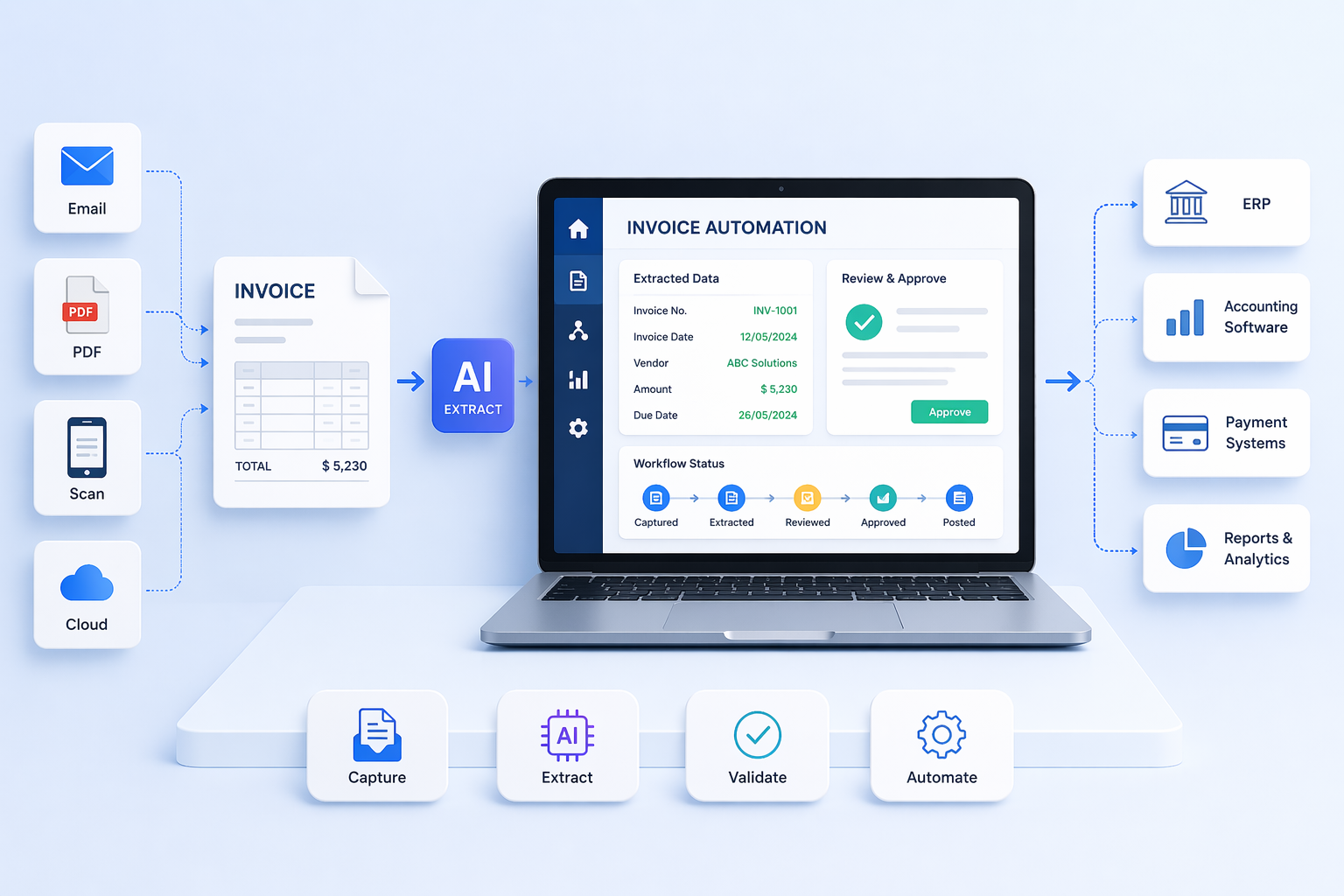
Invoice and payment reminder agents are AI-powered or rule-based automation systems that handle the entire invoicing lifecycle, from invoice creation to payment collection, without requiring constant manual intervention. These agents can automatically generate and send invoices based on triggers like completed services or billing cycles, continuously track due dates and payment statuses, and send timely, personalized reminders through multiple channels such as email, SMS, and WhatsApp. They are also capable of intelligently escalating overdue payments by adjusting reminder frequency and tone, ensuring consistent yet professional communication with customers.
In addition, these systems seamlessly integrate with accounting software and ERP platforms, enabling real-time data synchronization and accurate financial tracking. Overall, invoice and payment reminder agents function as a virtual accounts receivable assistant, operating 24/7 to streamline workflows, reduce delays, and ensure businesses get paid on time.
Why Businesses Need Payment Reminder Automation?
Late payments are not just an inconvenience, they disrupt operations, slow growth, and make financial planning unpredictable. When revenue is delayed, businesses struggle with cash flow, vendor payments, and reinvestment. Traditional invoicing processes make this worse, as they are manual and time-consuming. Teams spend hours tracking invoices, sending reminders, and updating records, which increases workload and reduces efficiency.
Manual systems are also prone to human error, leading to missed invoices, incorrect data, or forgotten follow-ups. Even small mistakes can result in delayed payments and revenue loss. Inconsistent follow-ups add another challenge, with no standard timing or tone in communication. Some customers are over-reminded, while others are missed, affecting relationships and payment behavior.
A lack of personalization further reduces effectiveness, as generic reminders fail to engage customers or encourage timely payments. By automating these processes, businesses can ensure consistent, accurate, and timely follow-ups while freeing teams to focus on core operations instead of chasing payments.
The Problem: Why Traditional Invoicing Fails?
Hours of Manual Work:
Finance teams often spend 15–20 hours per week chasing invoices, sending reminders, and updating payment records across multiple tools like spreadsheets, emails, and accounting systems. This repetitive workload not only drains productivity but also creates operational bottlenecks as businesses grow. Instead of focusing on forecasting, financial strategy, or growth initiatives, teams are stuck handling administrative tasks that could easily be automated. Over time, this manual dependency becomes unsustainable, especially for scaling organizations managing hundreds or thousands of invoices.
Delayed Cash Flow:
Late payments are one of the most critical financial risks businesses face. On average, invoices can remain unpaid for up to 28 days beyond the due date, creating a ripple effect across operations. Delayed cash flow impacts a company’s ability to pay vendors, manage payroll, and invest in growth opportunities. For small and mid-sized businesses, these delays can result in thousands of dollars in locked working capital every month, forcing them to rely on credit or external funding just to maintain operations.

Inconsistent Follow-Ups:
Manual follow-up processes often lack structure, leading to inconsistent communication in both timing and tone. Some customers may receive frequent or overly aggressive reminders, while others are completely overlooked due to oversight or workload. This inconsistency not only reduces the effectiveness of reminders but also harms customer relationships. Poor communication can create confusion, frustration, and even reluctance to engage, ultimately affecting how quickly and reliably payments are made.
Human Errors & Missed Invoices:
Without automation, invoicing processes are highly vulnerable to human error. Invoices can be missed, duplicated, or sent with incorrect details due to manual data entry and fragmented systems. Research indicates that over 35% of businesses experience missed or delayed invoices because of such errors. Even a small percentage of missed invoices can lead to significant revenue leakage over time, impacting profitability and financial accuracy. As invoice volumes grow, the risk of these errors increases exponentially, making manual systems unreliable for modern business needs.
How Invoice Reminder Agents Work (AI Architecture)?
1. Data Sources (ERP, CRM, Billing Systems)
The foundation of any invoice reminder agent lies in its ability to integrate seamlessly with existing business systems such as ERP platforms, CRM tools, and billing software. These integrations allow the system to pull real-time data, including invoice details, customer contact information, payment history, contract terms, and transaction records. By centralizing this data, the agent ensures that every action is based on accurate and up-to-date information. This eliminates data silos and reduces the need for manual data entry, while also enabling a unified view of customer financial interactions across the organization.
In addition, these integrations support bi-directional data flow, meaning updates such as payment confirmations, status changes, and communication logs are automatically synced back into the respective systems. This keeps all departments, finance, sales, and operations, aligned with the same information. Advanced systems can also enrich data by combining multiple sources, enabling better customer segmentation and more informed decision-making. As a result, businesses gain a strong data foundation that not only powers automation but also improves accuracy, transparency, and overall financial visibility.
2. AI Agent Brain
At the core of the system is the AI agent brain, which acts as an intelligent decision-maker and a virtual accounts receivable assistant. It continuously monitors invoice statuses, customer behavior patterns, and historical payment trends to understand how and when customers are likely to pay. By analyzing patterns such as payment delays, response rates, and communication preferences, the AI builds a dynamic understanding of each customer. Over time, it learns from every interaction, improving its ability to predict delays, identify risks, and recommend the best course of action. This adaptive intelligence enables businesses to shift from reactive follow-ups to proactive payment management, improving efficiency, reducing overdue invoices, and enhancing overall cash flow predictability.
Beyond this, the AI agent brain brings several additional advantages that significantly strengthen financial operations. It enables predictive insights, allowing businesses to anticipate late payments before they happen and take preventive action. It improves customer segmentation, grouping clients based on behavior and risk levels so that follow-ups can be more targeted and effective. The system also ensures consistent decision-making, removing human bias and variability in handling different customers.
Another key benefit is continuous optimization, as the AI refines its strategies over time based on outcomes, leading to better performance with minimal manual tuning. It also enhances scalability, allowing businesses to handle a growing number of invoices and customers without increasing team size. Additionally, the AI agent supports risk reduction by identifying high-risk accounts early and prioritizing them for follow-up, minimizing the chances of bad debt.
Finally, it contributes to a better customer experience by ensuring timely, relevant, and non-intrusive communication, which helps maintain strong relationships while still improving collection efficiency.
3. Smart Decision Engine
The smart decision engine is responsible for determining the optimal strategy for each invoice by combining business rules with AI-driven insights. It evaluates multiple factors such as due dates, customer segmentation, past payment behavior, invoice value, and urgency levels. Based on this analysis, it decides when to send reminders, which communication channel to use (email, SMS, WhatsApp), and what tone or messaging style to adopt. For instance, a loyal customer with a strong payment history may receive a gentle nudge, while a high-risk or frequently late payer may trigger earlier and more structured reminders.
This intelligent orchestration ensures that every interaction is timely, relevant, and aligned with business goals, ultimately increasing the chances of faster payment.
4. Auto-Send Communications
Once decisions are made, the system automatically executes communication workflows without requiring manual intervention. Reminders are sent through multiple channels such as email, SMS, WhatsApp, or in-app notifications, depending on customer preferences and engagement patterns. These communications can include invoice links, payment options, due date alerts, and escalation messages, all tailored to the specific context.
Automation ensures that reminders are delivered at the right time with consistent messaging, reducing delays and eliminating the risk of missed follow-ups. This not only improves collection efficiency but also creates a smoother and more professional customer experience.

5. Live Tracking Dashboard
A live tracking dashboard provides complete, real-time visibility into the status of all invoices, giving finance teams full control and transparency. Users can monitor key metrics such as invoices issued, opened, paid, overdue, and categorized by aging buckets. In addition to status tracking, the dashboard often includes advanced analytics such as payment trends, customer responsiveness, collection performance, and cash flow forecasts.
This level of insight enables teams to quickly identify bottlenecks, prioritize high-risk accounts, and make data-driven decisions. Instead of manually tracking every invoice, teams can focus only on exceptions and strategic actions.
6. Layered Architecture
Data Layer → ERP, CRM, Billing, Project Milestones
The data layer serves as the foundation of the system, aggregating both structured and unstructured data from multiple sources. It ensures that all financial and customer-related information is centralized, accurate, and accessible in real time. This unified data foundation supports better analysis, reduces duplication, and improves overall system reliability.
Processing Layer → AI Agent, Tone Engine, Scheduling Logic
The processing layer is where the core intelligence resides. It includes the AI agent, decision engine, tone optimization models, and scheduling algorithms that analyze incoming data and determine the best actions. This layer transforms raw data into actionable insights, enabling automated workflows that adapt based on context, behavior, and business rules.
Output Layer → Communication Channels + Dashboards
The output layer is responsible for delivering results, including automated reminders sent across multiple channels and real-time dashboards for monitoring performance. It ensures that customers receive timely and relevant communications while internal teams gain visibility into operations. This layer closes the loop by turning insights into actions and measurable outcomes.
Final Thoughts
Invoice and payment reminder agents are redefining how businesses manage their financial operations by shifting from manual, reactive processes to intelligent, automated workflows. Instead of spending hours chasing payments, finance teams can rely on AI-driven systems to handle invoicing, follow-ups, and tracking with precision and consistency. This not only improves efficiency but also ensures a smoother and more professional experience for customers.
By leveraging AI agents, organizations can reduce delays, minimize errors, and gain real-time visibility into their cash flow. More importantly, these systems enable proactive decision-making, helping businesses anticipate payment behavior and act accordingly.
FAQ's
1. What is an invoice and payment reminder agent?
An invoice and payment reminder agent is an AI-powered system that automates invoice creation, tracks payment status, and sends timely reminders to customers without manual intervention.
2. How do these agents improve cash flow?
They ensure consistent and timely follow-ups, reducing payment delays and increasing the likelihood of on-time collections.
3. Can these systems integrate with existing tools?
Yes, most invoice automation agents integrate seamlessly with ERP systems, CRM platforms, accounting software, and communication tools.
4. Are invoice reminder agents suitable for small businesses?
Absolutely. They are especially useful for small and mid-sized businesses that want to reduce manual work and improve payment efficiency without large teams.
5. How long does it take to implement an invoice automation solution?
Typically, implementation takes between 2–4 weeks depending on the complexity of integrations and business requirements.