

Introduction
In an era where speed, simplicity, and accessibility define user experience, traditional platforms are struggling to keep up. Mobile apps, web portals, and manual workflows often create friction, requiring users to adapt to systems instead of the other way around. The AI-Enabled WhatsApp Agent redefines this dynamic by turning a familiar messaging platform into a powerful, intelligent interface for both users and organizations.
By combining the reach of WhatsApp with advanced AI capabilities, organizations can now enable seamless, conversational interactions that go far beyond simple messaging. From managing members and retrieving information to executing complex workflows, everything can be accomplished through natural, human-like conversations, anytime, anywhere.
Why WhatsApp as a Platform?
With billions of users worldwide, WhatsApp has become a natural extension of how people communicate every day. Unlike traditional digital platforms that require onboarding, downloads, or training, WhatsApp removes friction entirely, users already understand how to interact, making adoption effortless across all demographics.
It enables real-time, conversational engagement where interactions feel immediate and personal rather than transactional. Messages are opened and responded to far more frequently compared to emails or apps, ensuring higher engagement and faster response cycles. This makes it an ideal channel not just for communication, but for executing meaningful actions.
By layering AI on top of WhatsApp, organizations can go beyond simple messaging and transform conversations into structured, actionable workflows, allowing users to search, update, manage, and interact with systems seamlessly through chat.
Core Capabilities of the AI-Enabled WhatsApp Agent
1. AI-Powered Conversations: From Commands to Context:
The biggest shift introduced by this system is moving from command-based interfaces to context-aware conversations. Users no longer need to follow predefined formats or rigid menus, they can simply type naturally, just as they would message another person.
The agent understands intent using advanced natural language processing and maintains context across multiple messages. For example, a user can start with “Add a new member,” provide details step-by-step, make corrections midway, and complete the process without restarting. This multi-turn conversational capability ensures that even complex workflows feel smooth, guided, and human-like rather than technical or fragmented.

Additionally, the system handles incomplete or ambiguous inputs gracefully. Instead of failing or returning errors, it intelligently asks follow-up questions, suggests possible interpretations, and guides users toward the correct outcome. This reduces friction and ensures that users don’t feel “stuck” at any point in the interaction.
Beyond basic understanding, the agent also adapts dynamically to user behavior. It can remember preferences within a session, adjust tone based on the context of the conversation, and prioritize relevant actions based on previous inputs. This creates a more personalized experience where interactions feel responsive rather than generic.
Over time, with continuous learning and feedback, the system becomes even more effective at interpreting user intent and improving response quality. The result is not just a chatbot, but a conversational assistant that evolves, making every interaction smarter, faster, and more intuitive.
2. Multi-Language Support: Designed for Real Users:
One of the most impactful capabilities of the AI WhatsApp Agent is its ability to communicate in multiple languages, including Kannada, Hindi, and English, without requiring users to manually switch settings.
The system automatically detects the user’s language and responds accordingly, creating a seamless and natural interaction experience. Even more importantly, it understands transliteration, where users type regional languages using the English alphabet. This reflects how people actually communicate in everyday scenarios, especially across India, and ensures that users don’t need to adapt their behavior to use the system.
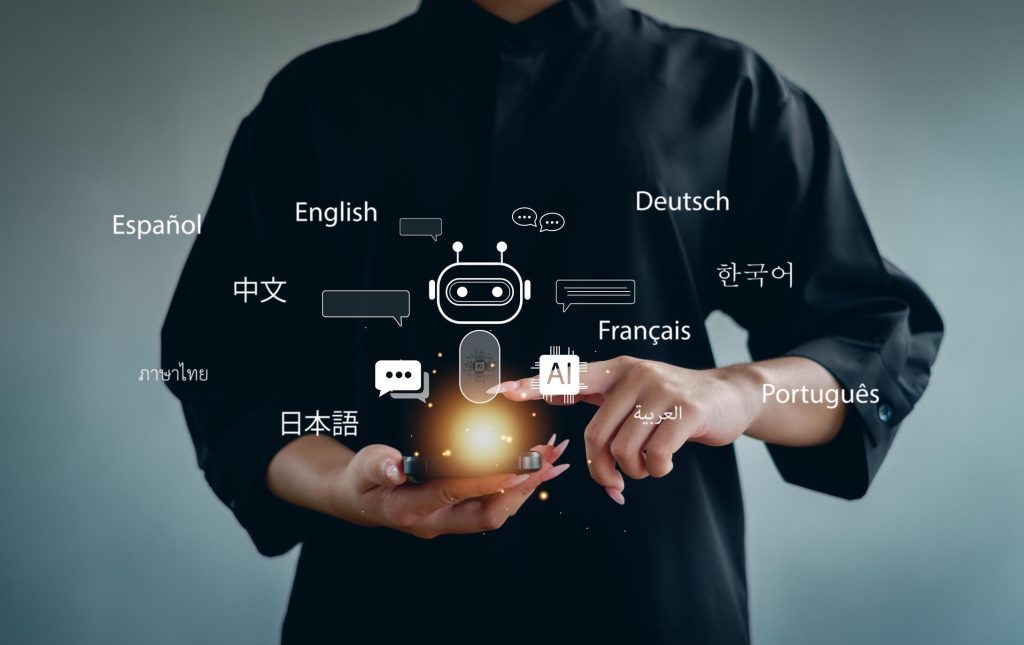
Beyond basic translation, the agent preserves meaning, tone, and context across languages. Whether a user switches languages mid-conversation or mixes multiple languages in a single message, the system can interpret and respond accurately. This flexibility is critical in real-world usage, where conversations are rarely limited to a single language.
Additionally, this capability reduces barriers for less tech-savvy users who may not be comfortable navigating English-only systems. By allowing users to interact in their preferred language, without friction, the platform becomes more inclusive, approachable, and widely adoptable.
Ultimately, multi-language support is not just a feature, it is a key enabler for scale. It allows organizations to engage diverse audiences, expand across regions, and deliver a truly user-centric experience without the complexity of building and maintaining multiple localized systems.
3. Knowledge Base with RAG: Instant Answers, No Documents:
Traditional systems require users to search through documents, reports, or websites to find information. The AI WhatsApp Agent replaces this with a Retrieval-Augmented Generation (RAG) approach, where users simply ask questions and receive precise answers instantly.
The system connects to structured and unstructured data sources such as reports, financial documents, event records, and organizational data. Using vector search and semantic understanding, it retrieves the most relevant information and generates a concise, contextual response.
This means users no longer need to interpret raw data or navigate multiple sources, the system does that for them. Whether it’s querying leadership details, financial summaries, or event information, the experience becomes conversational, fast, and highly efficient.
4. Member Management: Simplifying Complex Operations:
Managing member data is often one of the most time-consuming and error-prone administrative tasks. The AI WhatsApp Agent transforms this into a guided, conversational workflow, eliminating the need for complex forms, spreadsheets, or back-and-forth communication.
Administrators can add new members by simply initiating a conversation. Instead of presenting a long form, the system collects information step-by-step asking for one detail at a time, validating inputs in real-time, and ensuring completeness before submission. This structured yet flexible approach reduces mistakes and makes the process far more manageable. At the same time, built-in duplicate detection intelligently flags similar entries, helping maintain clean and consistent data.
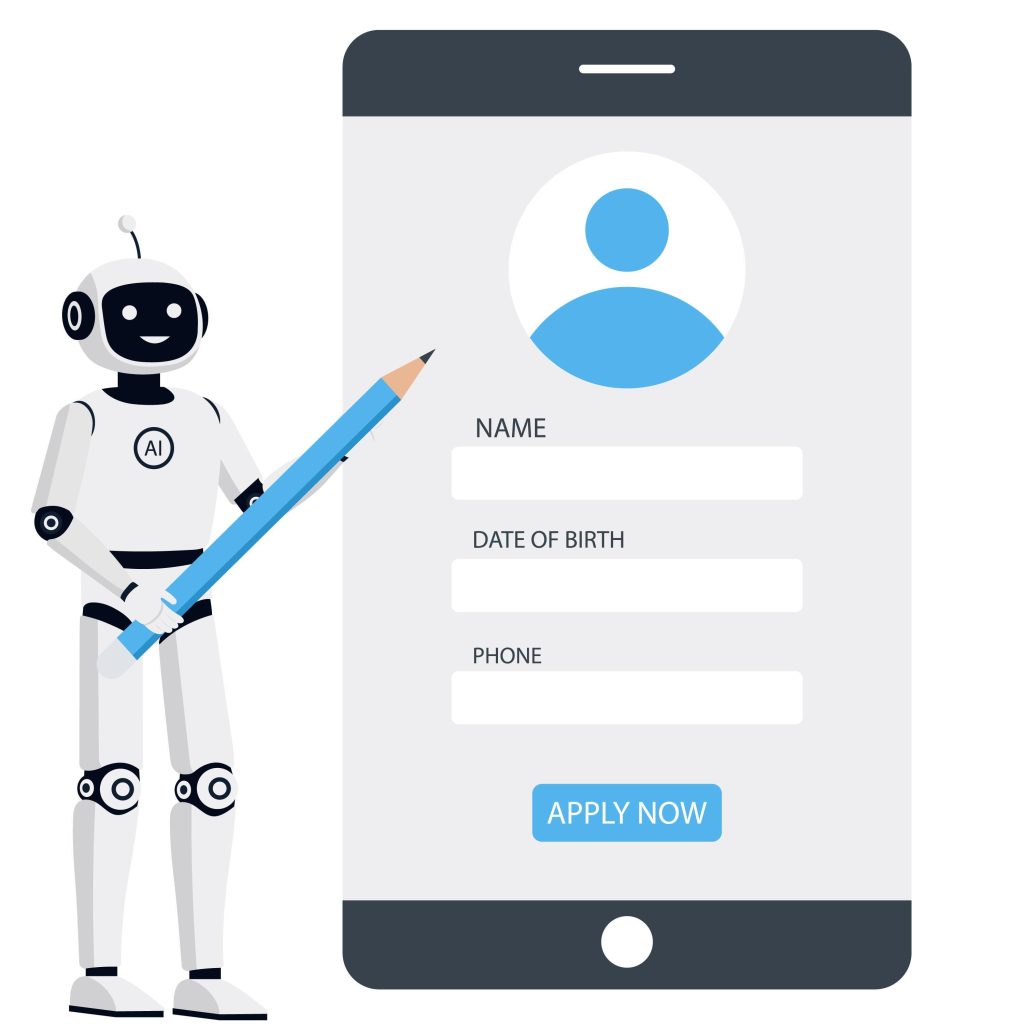
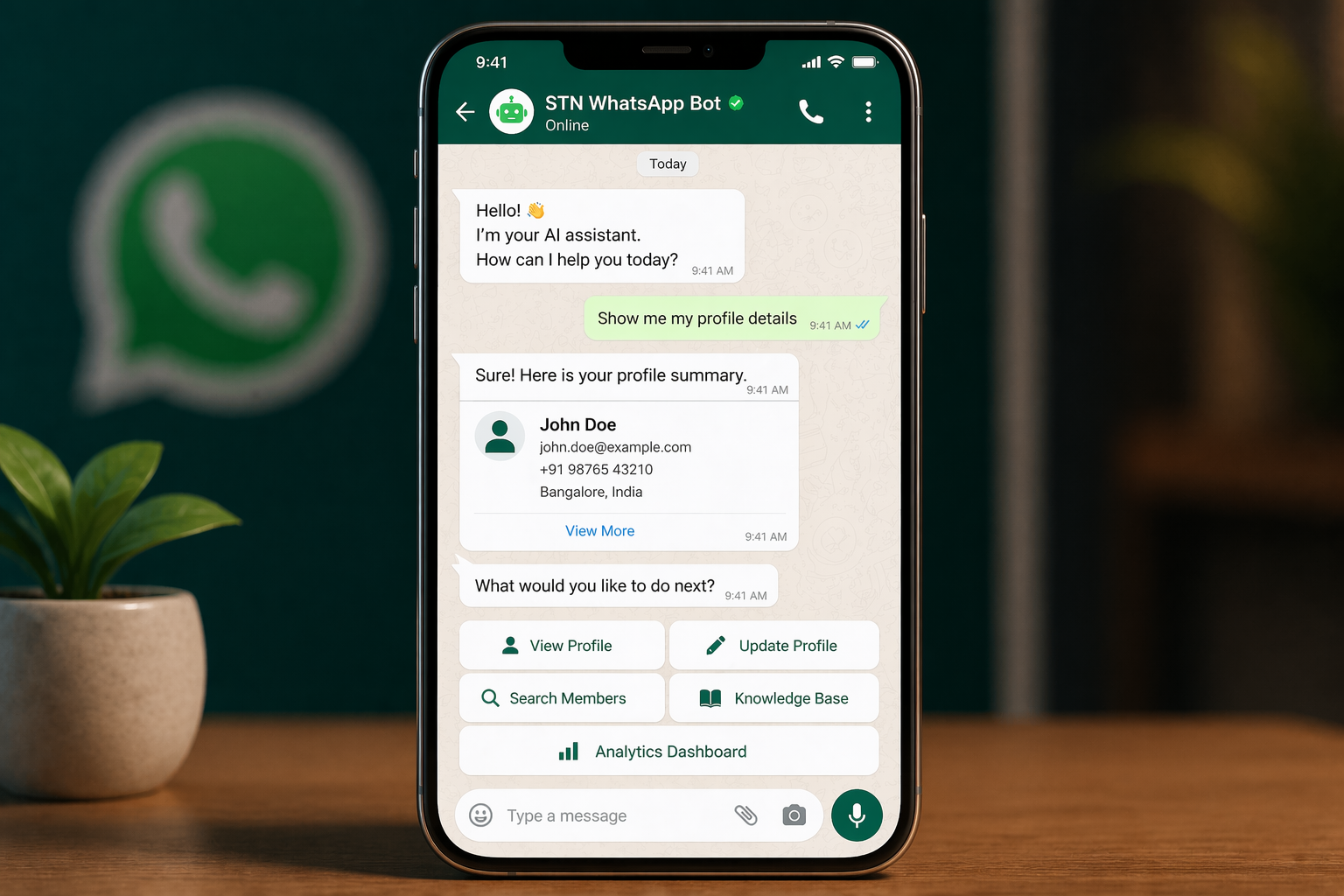
Profile updates are equally seamless. Both administrators and members can modify details through natural conversation, with the system summarizing changes and asking for confirmation before saving. This confirmation layer ensures accuracy while removing the need for manual review or correction later.
The system also supports rich profile data across multiple fields, ranging from personal and contact information to professional and membership details. Despite this complexity, the conversational interface keeps the experience simple and intuitive, hiding the underlying data structure from the user.
Additionally, users can pause and resume workflows, review previously entered information, or make corrections mid-process without starting over. This flexibility significantly improves efficiency and user experience, especially in real-world scenarios where interruptions are common.
4. Self-Service Experience: Empowering Users:
The agent enables a powerful self-service model where users can access and manage their own information without relying on administrators. Instead of submitting requests or waiting for manual updates, users can simply interact with the system in real time and get things done instantly.
Members can view their profiles, update personal details, and retrieve relevant information directly through WhatsApp. Whether it’s changing a phone number, updating an address, or checking membership details, everything happens within a familiar chat interface. This not only improves the overall user experience but also significantly reduces the operational burden on support and admin teams.
The system is designed to be intuitive and responsive. Users are guided through updates step-by-step, with clear prompts and confirmations to ensure accuracy. They can also review their existing information before making changes, minimizing the risk of errors or incomplete updates.
Privacy is maintained through intelligent controls. Sensitive information is masked by default and only revealed through authenticated workflows, ensuring that only the rightful user can access or modify critical data. This balance between accessibility and security builds trust while maintaining compliance.
5. Intelligent Search: From Keywords to Meaning:
Unlike traditional search systems that rely on exact keyword matching, the AI WhatsApp Agent enables semantic search understanding what the user means rather than just what they type. This allows users to interact more naturally, without worrying about precise phrasing or structured queries.
Administrators can perform complex searches like “Find members in Bangalore working in fintech” or “Show companies from the 2020 batch,” and the system intelligently interprets intent. It applies filters across multiple data fields, such as location, industry, year, and role, and returns highly relevant results even when the input is incomplete, vague, or conversational.
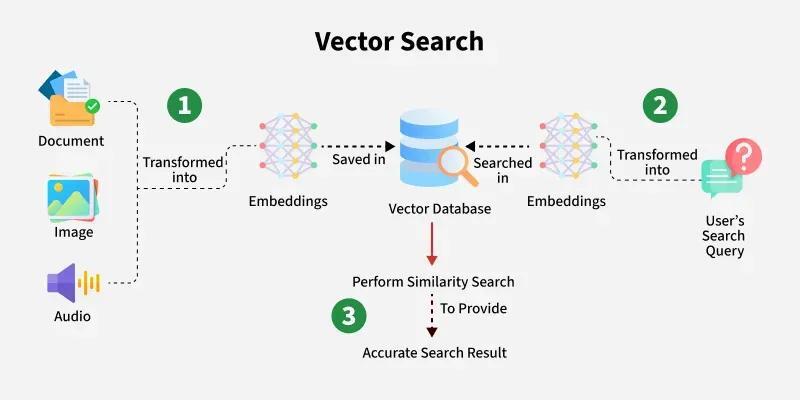
What makes this especially powerful is its ability to combine multiple search techniques. Fuzzy matching ensures that minor spelling errors or variations don’t affect results, while partial matching allows users to search with limited information. On top of that, semantic understanding connects related concepts, so even indirect queries can produce accurate outcomes.
To enhance usability, results are presented in a structured and digestible format, often with pagination to handle large datasets. Users can refine queries further within the same conversation, making the search experience interactive rather than static.
Ultimately, this transforms WhatsApp into more than just a messaging platform, it becomes a powerful, conversational data discovery tool, enabling faster insights and better decision-making.
6. Interactive Workflows: Ensuring Accuracy and Control:
A key challenge in conversational systems is maintaining accuracy. The AI WhatsApp Agent addresses this through interactive workflows that combine flexibility with control.
Before any data is saved, the system presents a summary along with options to confirm, edit, or cancel. This ensures that users have full visibility and control over their inputs.
Additionally, users can request to see the data collected so far at any point during the interaction. This transparency builds trust and reduces errors, especially in multi-step workflows. By blending conversational input with structured validation, the system achieves both ease of use and reliability.
7. Enterprise-Grade Security: Built for Trust:
Every incoming message is cryptographically verified to confirm its authenticity and integrity, preventing tampering or unauthorized access at the entry point. On top of this, role-based access control strictly governs what each user can do, whether they are an administrator, a member, or a public user. Sensitive operations such as adding members, accessing detailed records, or performing searches are restricted to authorized roles only.
Personally identifiable information (PII) is carefully protected throughout the system. Sensitive data such as phone numbers and identity-related details are automatically masked in logs and responses, ensuring that exposure is minimized even at the system level. This approach helps maintain compliance with data protection standards while safeguarding user privacy.
In addition, every interaction is captured in a comprehensive audit trail. From messages sent and received to actions performed and decisions made by the system, everything is logged with timestamps. This provides full traceability for monitoring, debugging, and compliance audits, ensuring transparency across the platform.
Session management mechanisms further strengthen security by automatically expiring inactive sessions. This prevents unauthorized access in cases where a device is left unattended or a conversation is abandoned midway. Combined with input validation, rate limiting, and post-response security checks, the system ensures that both data and interactions remain secure at all times.
Overall, the platform delivers enterprise-grade security without compromising user experience, building trust while enabling seamless, conversational interactions.
8. Analytics & Insights: Turning Conversations into Data:
Organizations can track key performance metrics such as message volume, completion rates, response times, and error rates in real time. These metrics help evaluate how efficiently the system is operating and where improvements may be needed. At a deeper level, intent analytics reveal what users are asking most frequently, whether it’s profile updates, searches, or knowledge queries, helping teams identify demand patterns, unmet needs, and opportunities for enhancement.
Trend analysis across different time periods allows organizations to understand user behavior at scale. Teams can identify peak usage hours, seasonal spikes, and growth patterns, enabling better resource planning and system optimization. This ensures the platform remains responsive and reliable even during high-demand periods.
Another powerful capability is confidence scoring. The system automatically flags interactions where the AI had low confidence in its response, allowing these cases to be reviewed and improved. Over time, this creates a feedback loop that continuously enhances accuracy and performance.
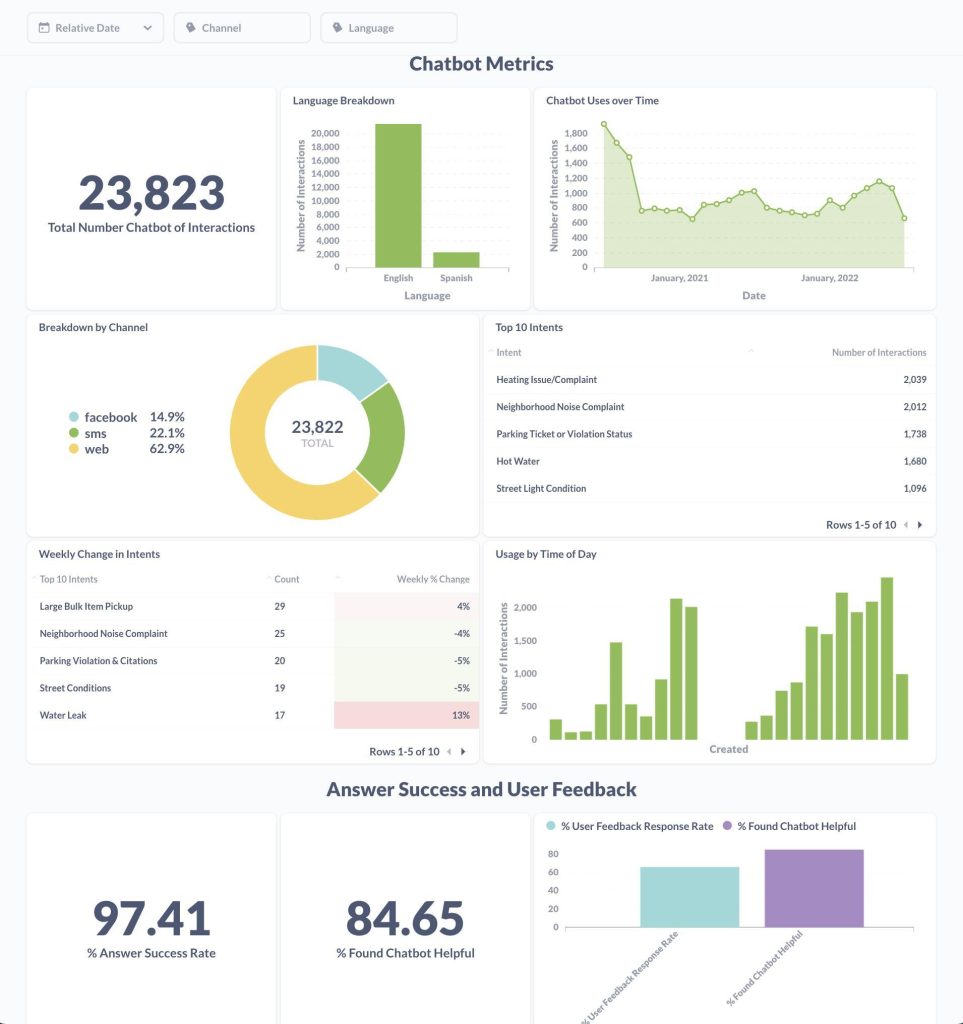
Additionally, analytics can be filtered by custom date ranges, user segments, or interaction types, giving stakeholders precise control over reporting and insights. This level of visibility transforms the chatbot from a simple automation tool into a strategic intelligence layer, empowering organizations to continuously refine user experience, improve operational efficiency, and make data-driven decisions.
WhatsApp Chatbot for Suppliers & Wholesalers: Real-World Use Cases
Product & Catalog Queries — Instant Responses, No Repetition
Wholesale businesses deal with constant inquiries about products, pricing, and catalogs. A WhatsApp chatbot eliminates the need to manually answer each query by instantly providing accurate and consistent responses. Customers can simply ask for product details or bulk pricing, and the bot responds with structured information, including pricing tiers and catalog links. For example, when a customer asks, “What’s the price for 100 units of PVC connectors?”, the bot can immediately respond with bulk pricing and even prompt the user to proceed with an order. This not only saves time but also improves customer experience through speed and reliability.
Inventory & Availability Checks — Real-Time Visibility
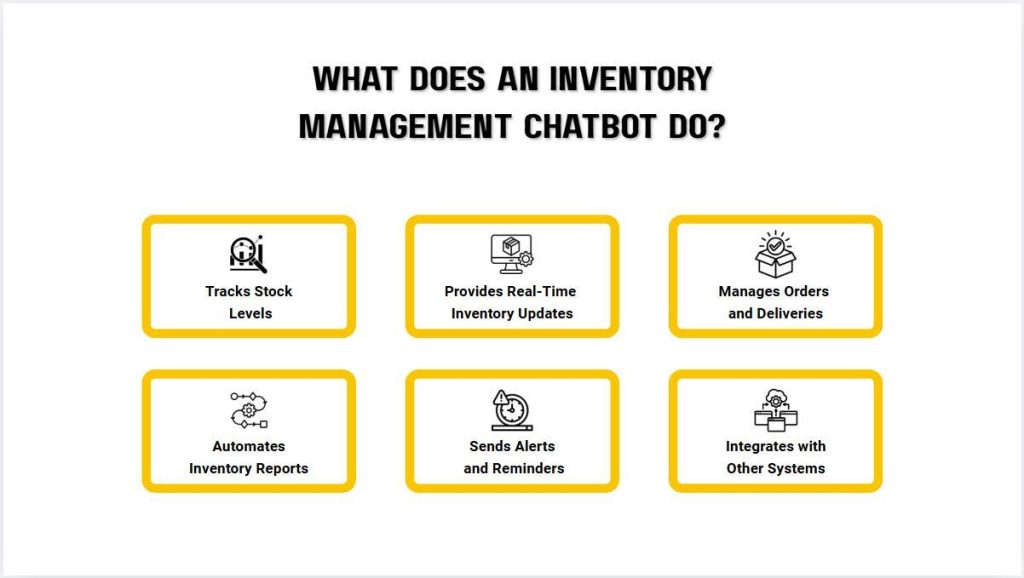
Checking stock availability is one of the most frequent interactions in wholesale operations. Instead of relying on manual verification, the chatbot integrates with backend data sources like Excel or Google Sheets to provide real-time inventory updates. A customer asking, “Is item 4521 available?” can instantly receive a response such as “Yes, 320 units are available and ready for dispatch within 24 hours.” This reduces delays, minimizes miscommunication, and allows customers to make faster purchasing decisions.
Order Placement & Tracking — Simplified via Chat
Order management becomes significantly more efficient when handled through WhatsApp. The chatbot can guide users through placing orders step-by-step, collect required details, and present a summary before confirmation. Once confirmed, it generates an order ID and shares updates throughout the lifecycle. For instance, a user can simply type, “Order 200 units of item 4521,” and the bot will respond with a detailed summary and confirmation prompt. This conversational approach removes friction from traditional ordering processes and ensures better traceability.
Technical & Product Support — Context-Aware Assistance
Wholesale products often involve technical specifications, and customers frequently seek clarification before making a purchase. The chatbot leverages a knowledge base to provide accurate, context-aware answers. Instead of generic responses, it understands the query and delivers precise information. For example, when asked, “Is this motor compatible with 3-phase supply?”, the bot can provide a clear answer along with additional resources like datasheets. This reduces dependency on support teams while maintaining high-quality assistance.
Order Updates & Notifications — Proactive Communication
Keeping customers informed about their orders is crucial, but manually sending updates can be time-consuming. The chatbot automates this process by sending proactive notifications such as order confirmations, dispatch updates, delivery timelines, and payment reminders. For example, a customer might receive a message like, “Your order #ORD1023 has been dispatched and will be delivered within 2 days.” This improves transparency and significantly reduces inbound queries related to order status.
Bulk Buyer Engagement — Continuous Relationship Building
For wholesalers, repeat buyers are key to business growth. The WhatsApp chatbot helps maintain ongoing engagement by sharing updates such as new product launches, restocked items, and price changes. It can also recommend products based on previous orders, creating opportunities for upselling and cross-selling. For instance, the bot can notify a customer, “Item 4521 is back in stock. Would you like to reorder based on your last purchase?” This keeps customers connected and encourages repeat business without manual follow-ups.
Low Setup Barrier — Quick to Implement and Scale
One of the biggest advantages of this solution is its simplicity. Businesses do not need complex systems or heavy infrastructure to get started. Even a basic setup using Excel or Google Sheets for data management is sufficient. The system can be deployed quickly, often within a few weeks, and can scale as the business grows. This makes it particularly suitable for small and mid-sized wholesalers looking to adopt automation without significant upfront investment.
Human-in-the-Loop — Automation with Control
While the chatbot handles repetitive and structured interactions, it is designed to work alongside human teams rather than replace them. Complex scenarios such as negotiations, exceptions, or disputes are automatically flagged or handed over to a human representative. This ensures that critical decisions still involve human judgment, while routine tasks are efficiently managed by the system. The result is a balanced approach where automation improves efficiency without compromising control or customer relationships.
Final Thoughts
The AI-Enabled WhatsApp Agent transforms how users interact with systems by bringing everything into simple, natural conversations on WhatsApp. It removes complexity, improves accessibility, and enables users to get things done without navigating multiple platforms.
Backed by a robust architecture like the STN WhatsApp Bot, it combines AI, scalability, and security to deliver a seamless and reliable experience. Ultimately, it’s a shift toward making technology more intuitive—where users simply chat, and the system takes care of the rest.
FAQ's
1. What is an AI-Enabled WhatsApp Agent?
An AI-Enabled WhatsApp Agent is a conversational system that allows users to interact with services, data, and workflows directly through WhatsApp. It uses AI to understand user intent, respond naturally, and perform actions such as searching data, updating profiles, or answering queries.
2. How is this different from a traditional chatbot?
Unlike rule-based chatbots that rely on predefined commands and menus, this system uses advanced AI to understand natural language and context. It supports multi-turn conversations, semantic search, and dynamic workflows, making interactions more flexible, accurate, and human-like.
3. Is the system secure for handling sensitive data?
Yes, the platform is built with enterprise-grade security. It includes message authentication, role-based access control, PII masking, audit logging, and session management to ensure that all data and interactions are protected.
4. Can users interact in regional languages?
Absolutely. The agent supports multiple languages such as Kannada, Hindi, and English, including transliteration (typing regional languages in English script). It automatically detects and responds in the user’s preferred language, making it highly accessible.
5. What kind of tasks can users perform through the WhatsApp Agent?
Users can perform a wide range of tasks including member registration, profile updates, searching for people or companies, accessing knowledge base information, retrieving event details, and more—all through simple conversational interactions.