


Introduction
As online marketplaces continue to evolve, buyer and seller expectations are changing. Buyers no longer expect marketplaces to function solely as fixed-price catalogs where products can only be purchased at the listed price. Instead, they increasingly seek flexibility, transparency, and greater control throughout the purchasing journey.
At the same time, sellers want tools that help them engage potential buyers, maximize sales opportunities, and maintain control over their pricing strategy without adding unnecessary administrative effort. Marketplace operators, meanwhile, are constantly looking for ways to improve user engagement, increase transaction completion rates, and create more dynamic buying and selling experiences.
By allowing buyers to submit offers and sellers to respond through acceptance, rejection, or counter-offers, the marketplace creates additional opportunities to convert buyer interest into completed transactions. More importantly, all negotiations remain within the platform, ensuring a transparent, professional, and streamlined purchasing experience for everyone involved.
Feature : Creating a Structured Offer and Negotiation Experience
The Challenge
Many product marketplaces rely on fixed-price listings because they are simple to manage and easy for buyers to understand. Sellers define a price during listing creation, and buyers either purchase the item at that price or move on to another option. While this model works for many transactions, it can create missed opportunities when buyers are interested in a product but are hesitant about the asking price. In categories such as second-hand goods, collectibles, specialty products, luxury items, and niche marketplaces, negotiation is often a natural part of the buying process.
Without a structured negotiation mechanism, buyers may abandon the purchase altogether or attempt to negotiate through external communication channels such as email, messaging apps, or phone calls. This creates friction, reduces visibility for marketplace operators, and increases the risk of losing potential sales.
The challenge was to create a negotiation process that feels natural for buyers and sellers while preserving the simplicity of the existing purchasing experience.
The Solution
Instead of implementing a traditional quote request workflow, the marketplace introduced a negotiation-driven offer system specifically designed for product listings. This distinction is important because the marketplace already contains predefined listing prices. Buyers are not requesting entirely new pricing proposals; they are negotiating against an existing product price established by the seller.
The terminology, user interface, and transaction flow were therefore redesigned to support an offer-based experience. This creates a more familiar and intuitive purchasing journey that aligns with how negotiations typically happen in real-world commerce. By framing the interaction as a negotiation rather than a quote request, buyers immediately understand the purpose of the feature and can engage more naturally with sellers.
How the Negotiation Workflow Works?
Step 1: Buyer Submits an Offer
When browsing a listing, buyers can submit an offer indicating the amount they would like to pay for the product. Instead of being limited to the listed price, they have the flexibility to propose a value that better aligns with their budget or perceived value of the item.
This feature provides buyers with an alternative path when they are interested in a product but feel the listed price exceeds their expectations. Rather than abandoning the purchase and searching elsewhere, they can initiate a pricing discussion directly within the marketplace. By making negotiations part of the transaction journey, the marketplace keeps buyers engaged and creates additional opportunities to convert interest into a completed sale.
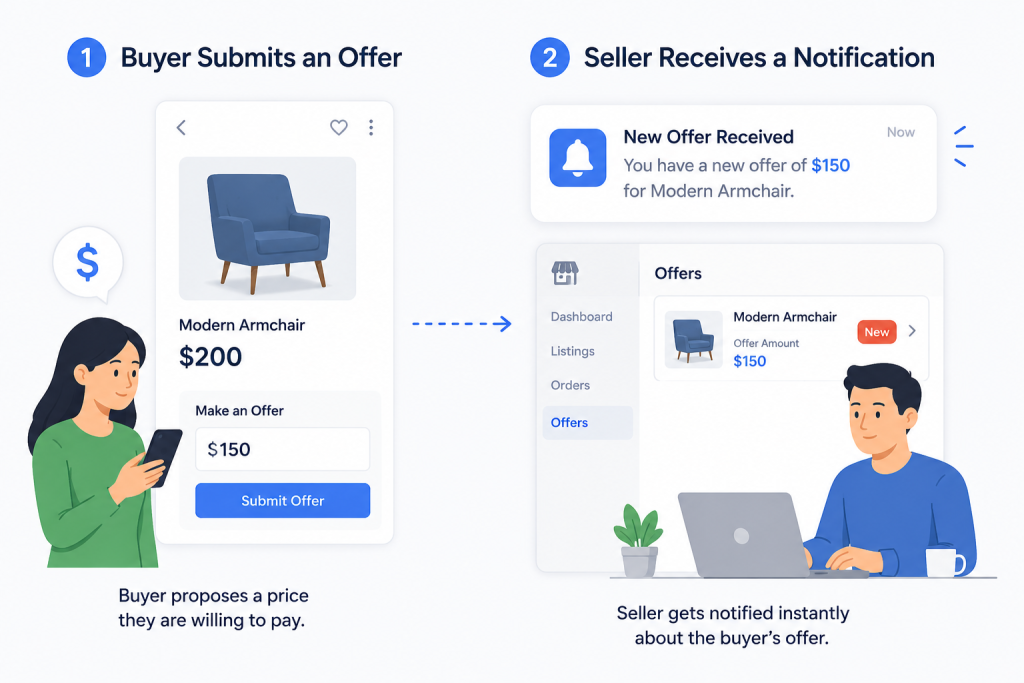
Step 2: Seller Receives a Notification
Once an offer is submitted, the seller receives a notification informing them that a buyer has expressed interest in negotiating the price. This immediate notification ensures that sellers remain aware of potential sales opportunities and can respond without unnecessary delays. Faster response times help maintain buyer interest and create a more dynamic marketplace experience.
The notification also acts as an engagement trigger for sellers, encouraging them to review active listings and interact with interested buyers who may be ready to make a purchase.
Step 3: Seller Reviews the Offer
After receiving the notification, the seller can review the proposed amount and assess whether it aligns with their selling objectives. The decision may depend on factors such as product demand, inventory availability, listing age, market conditions, and desired profit margins. For example, a seller may be more willing to negotiate on older inventory while holding firm on products that are in high demand.
This flexibility allows sellers to make informed business decisions while maintaining full control over the final selling price. Rather than following a rigid pricing model, sellers can evaluate each opportunity individually and respond accordingly.
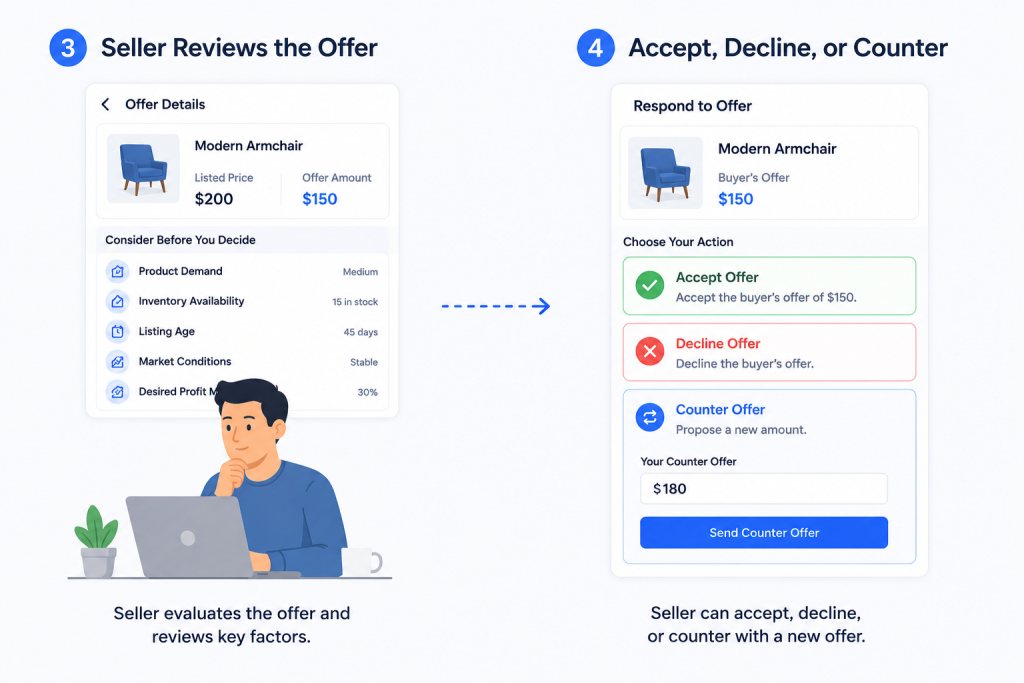
Step 4: Accept, Decline, or Counter
Once the offer has been reviewed, sellers can choose from three possible actions: accept the offer, decline the offer, or submit a counter-offer. If the proposed amount meets the seller’s expectations, the offer can be accepted immediately. If the offer falls outside an acceptable range, it can be declined. Alternatively, the seller can submit a counter-offer with a revised amount and continue the negotiation process.
This flexibility mirrors real-world buying and selling behavior while providing a structured framework for negotiations. Both parties remain engaged within the marketplace, creating a professional and transparent experience without relying on external communication channels.
Step 5: Reach an Agreement
Negotiations can continue through multiple rounds of offers and counter-offers until both parties agree on a final purchase price. Throughout the process, every interaction remains visible within the transaction flow, creating a clear record of the negotiation history. This transparency helps reduce misunderstandings and ensures both parties are aligned on the latest proposed terms.
Once a mutually acceptable price is reached, the negotiation concludes and the transaction moves forward. This structured approach helps facilitate productive discussions while increasing the likelihood of a successful outcome.
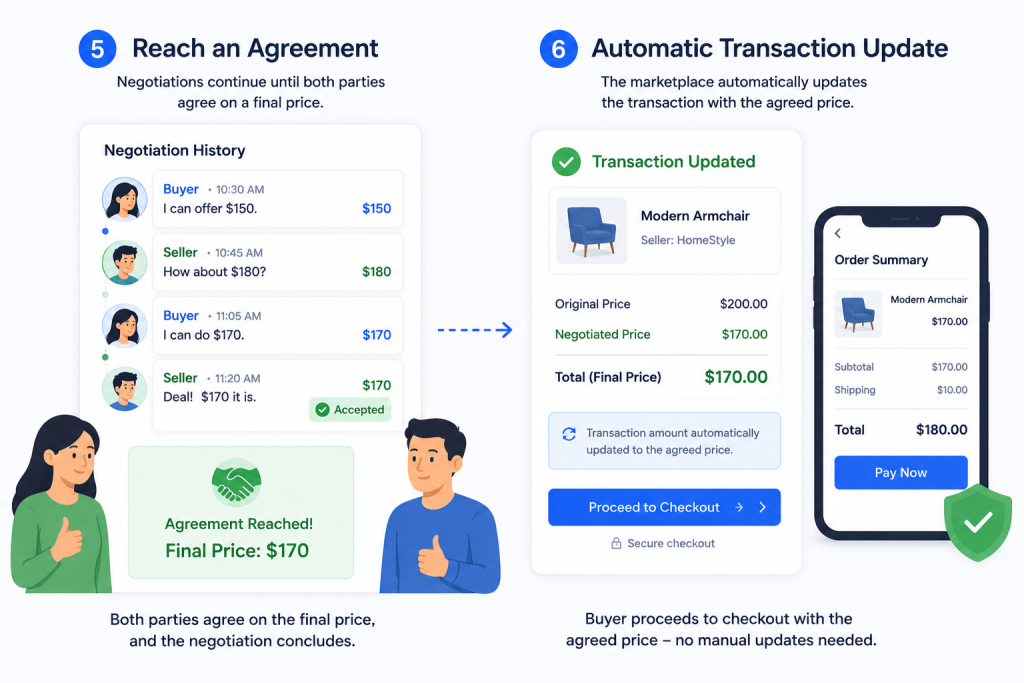
Step 6: Automatic Transaction Update
Once an agreement is reached, the marketplace automatically updates the transaction amount to reflect the negotiated price. The accepted amount becomes the new purchase price associated with the transaction.
The buyer can then proceed directly to checkout using the agreed amount without requiring any manual adjustments from the seller or marketplace administrator. This eliminates unnecessary steps and ensures a seamless transition from negotiation to payment.
By automating this process, the marketplace reduces administrative effort, prevents pricing discrepancies, and creates a smoother purchasing experience. The final agreed price is accurately reflected throughout checkout, payment processing, and order management, ensuring consistency for both buyers and sellers.
Why This Matters?
Price sensitivity is one of the most common reasons buyers abandon purchases. Even when buyers are genuinely interested in a product, a relatively small difference between the listed price and the amount they are willing to pay can prevent a transaction from moving forward.
By introducing a structured negotiation process, the marketplace creates an opportunity to bridge this gap and keep potential buyers engaged. Rather than leaving the platform or abandoning the purchase entirely, buyers can initiate a conversation and explore whether a mutually acceptable price can be reached.
The negotiation workflow also creates a more flexible and buyer-friendly purchasing experience. Buyers feel more empowered because they have the ability to make offers, while sellers gain the flexibility to evaluate opportunities on a case-by-case basis without being restricted to fixed pricing.
In addition, keeping negotiations within the platform improves transparency and professionalism. Every offer, counter-offer, and decision is recorded within the transaction flow, reducing misunderstandings and providing a clear history of interactions for both parties. This creates a more trustworthy marketplace environment and encourages meaningful buyer-seller engagement.
Business Benefits
Benefits for Buyers
- Greater Pricing Flexibility Buyers are no longer restricted to fixed-price transactions and can submit offers that better align with their budget and purchasing expectations.
- Opportunity to Secure Better Deals The negotiation process gives buyers the chance to purchase products at a mutually agreed price, making higher-value or specialty items more accessible.
- More Interactive Shopping Experience Instead of a simple buy-or-leave decision, buyers can actively engage in the purchasing process through direct price discussions with sellers.
- Reduced Purchase Abandonment When a product is slightly outside a buyer’s budget, the ability to negotiate provides an alternative path to completing the purchase rather than abandoning it altogether.
- Personalized Buying Journey Direct interaction with sellers creates a more tailored and customer-focused experience, helping buyers feel more involved in the transaction.
- Increased Confidence and Transparency All offers, counter-offers, and agreements are managed within the platform, giving buyers clear visibility into the negotiation process and building trust throughout the transaction journey.
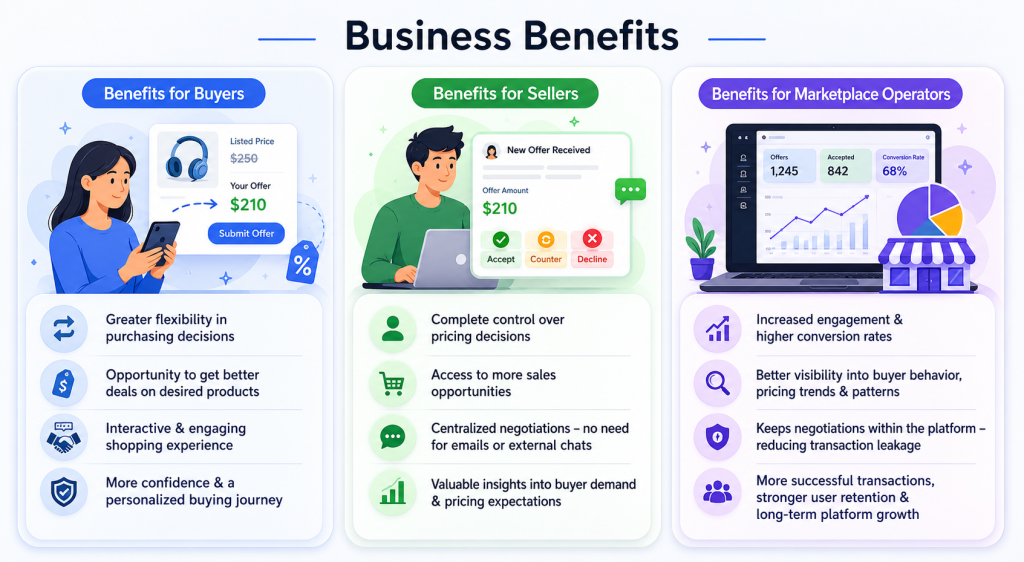
Benefits for Sellers
- Complete Control Over Pricing Decisions Sellers can choose to accept, decline, or counter offers, ensuring they maintain full control over the final selling price.
- Increased Sales Opportunities The negotiation process helps sellers engage buyers who may be hesitant at the listed price, creating additional opportunities to convert interest into completed sales.
- Improved Inventory Movement Sellers can use negotiations strategically to move inventory more effectively while balancing pricing and demand.
- Centralized and Organized Communication All offers and pricing discussions are managed within the marketplace, eliminating the need for emails, phone calls, or third-party messaging platforms.
- Valuable Buyer Insights Negotiation activity provides visibility into buyer demand and pricing expectations, helping sellers make more informed pricing and inventory decisions in the future.
Benefits for Marketplace Operators
- Higher User Engagement Negotiation features encourage more interaction between buyers and sellers, keeping users actively engaged within the marketplace and increasing participation across listings.
- Improved Transaction Visibility Since all offers, counter-offers, and pricing discussions occur within the platform, operators gain greater visibility into the complete transaction journey.
- Better Insights and Analytics Negotiation data provides valuable information about buyer behavior, pricing trends, and purchasing patterns, helping operators make informed decisions to improve marketplace performance.
- Reduced Transaction Leakage By enabling negotiations directly within the platform, buyers and sellers are less likely to move discussions to external channels, helping operators retain control over transactions.
- Increased Conversion Opportunities The ability to negotiate helps overcome pricing barriers that might otherwise prevent purchases, leading to more completed transactions and stronger marketplace growth.
Most importantly, the negotiation workflow creates additional opportunities for successful transactions by helping buyers and sellers overcome pricing barriers. This can contribute to increased marketplace activity, stronger user retention, and long-term platform growth.
Conclusion
Modern marketplace users expect more than just a place to buy and sell products. They expect flexibility, transparency, and a purchasing experience that reflects how real-world transactions often take place.
By introducing a structured Offer & Negotiation Workflow, the marketplace creates a more engaging buying experience while giving sellers greater control over pricing discussions. Buyers can submit offers, sellers can respond through acceptance, rejection, or counter-offers, and both parties can reach mutually beneficial agreements without leaving the platform.
Most importantly, the entire process remains organized, transparent, and seamlessly integrated into the transaction journey. This not only helps increase buyer engagement and conversion opportunities but also strengthens the overall marketplace experience, creating a more dynamic platform that supports long-term growth for buyers, sellers, and marketplace operators alike.
FAQ's
1. How does the offer and negotiation workflow work?
Buyers can submit an offer against a listed product price directly through the marketplace. Sellers can then review the offer and choose to accept it, decline it, or submit a counter-offer. Once both parties agree on a price, the transaction automatically updates to the negotiated amount and proceeds to checkout.
2. Can sellers control which offers they accept?
Yes. Sellers have complete control throughout the negotiation process. They can evaluate each offer based on factors such as product demand, inventory levels, pricing strategy, and profit margins before deciding how to respond.
3. What happens when an offer is accepted?
When a seller accepts an offer, the marketplace automatically updates the transaction with the agreed price. The buyer can then continue to checkout and complete the purchase using the negotiated amount without any manual intervention.
4. How does the negotiation feature benefit marketplace operators?
The feature increases buyer and seller engagement, improves transaction visibility, and helps reduce transaction leakage by keeping all pricing discussions within the platform. It also provides valuable insights into buyer behavior and pricing trends.
5. Can buyers and sellers exchange multiple counter-offers?
Yes. The workflow supports multiple rounds of offers and counter-offers until both parties reach a mutually acceptable price. All negotiations remain visible within the transaction flow, ensuring transparency and a clear record of the agreement process.